Commercial Roof Replacement in Centerton
Plan a commercial roof replacement around the assembly, drainage and use of the building. We help Centerton owners understand removal, recover suitability and the work a new roof needs.
Replace the commercial roof with its next use in mind
A commercial replacement becomes useful when the old assembly can no longer support worthwhile repair. Recurring failures, wet insulation, deteriorated support or widespread covering problems can all move the decision beyond another patch.
The next roof should address those findings, including how water leaves the building and how rooftop equipment interrupts the covering. Replacing only the visible material without resolving the underlying condition can carry the same problem into the new project.
We also plan around the occupied building. Access, deliveries, weather protection and any equipment coordination affect the practical scope. A free inspection provides a starting point for discussing the roof and those operating needs together.
Removal and recover for Centerton commercial roofs
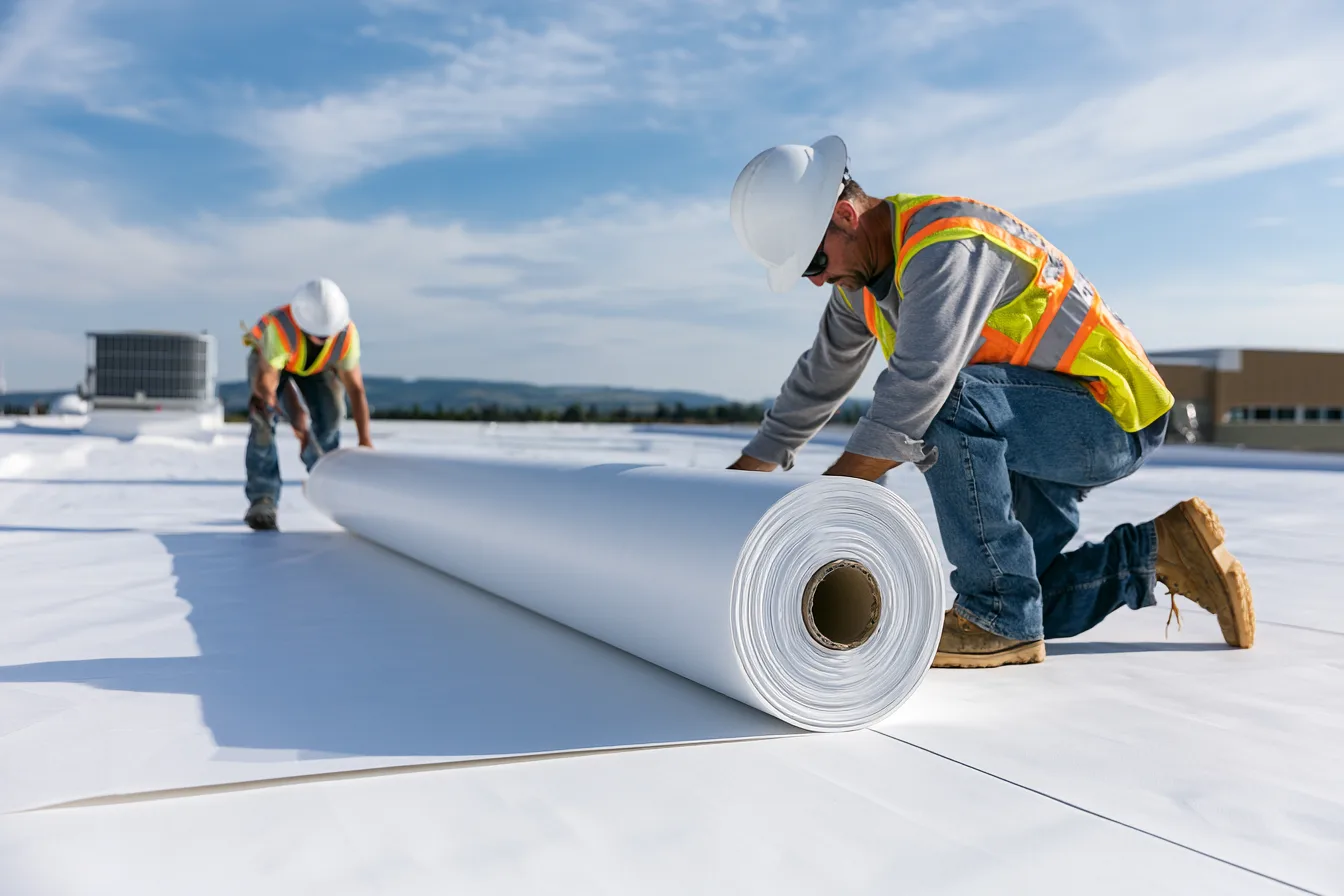
Remove the existing assembly
Removal exposes the support and allows affected insulation and other failed material to be replaced. It can be necessary when moisture, deterioration or the existing assembly makes retaining the roof unsuitable.
Evaluate a recover separately
A recover places a new system over an eligible existing roof. Layer count, structural capacity, dryness, substrate condition and applicable requirements need verification. It should not be chosen merely because it avoids visible tear-off work.
Planning the new Centerton commercial roof assembly
Coordinate a replacement around an occupied building
Define roof sections and building constraints
Identify the replacement areas and how spaces below them are occupied. Discuss sensitive equipment, entrances and routes that must remain accessible.
Coordinate staging and temporary protection
Material delivery, lifting, debris handling and the way opened areas will be protected need a project-specific plan. Weather can alter that sequence.
Complete details and close out the work
The new covering must connect at every drain, curb and perimeter. Product information, maintenance needs and any applicable written coverage should be clear for the building’s ongoing care.
Commercial roof replacement FAQs
Does every commercial replacement require full tear-off?
The correct scope depends on the assembly and applicable requirements. A recover requires an eligible dry, sound and adequately supported roof; it is not assumed. Removal may be necessary to address conditions below the covering.
What most affects commercial replacement cost?
Roof area, removal, moisture damage, deck repairs, insulation, drainage corrections, attachment, equipment details and building access all affect the project.
Can a coating be a better option?
It may be when the existing assembly is a suitable restoration candidate. The coating guide explains why sound support, moisture condition and preparation come before that decision.
Can roof work be phased around occupants?
Phasing may be possible, but access, weather protection and the roof layout determine how it can be done. Discuss operating requirements before the schedule and work zones are finalized.