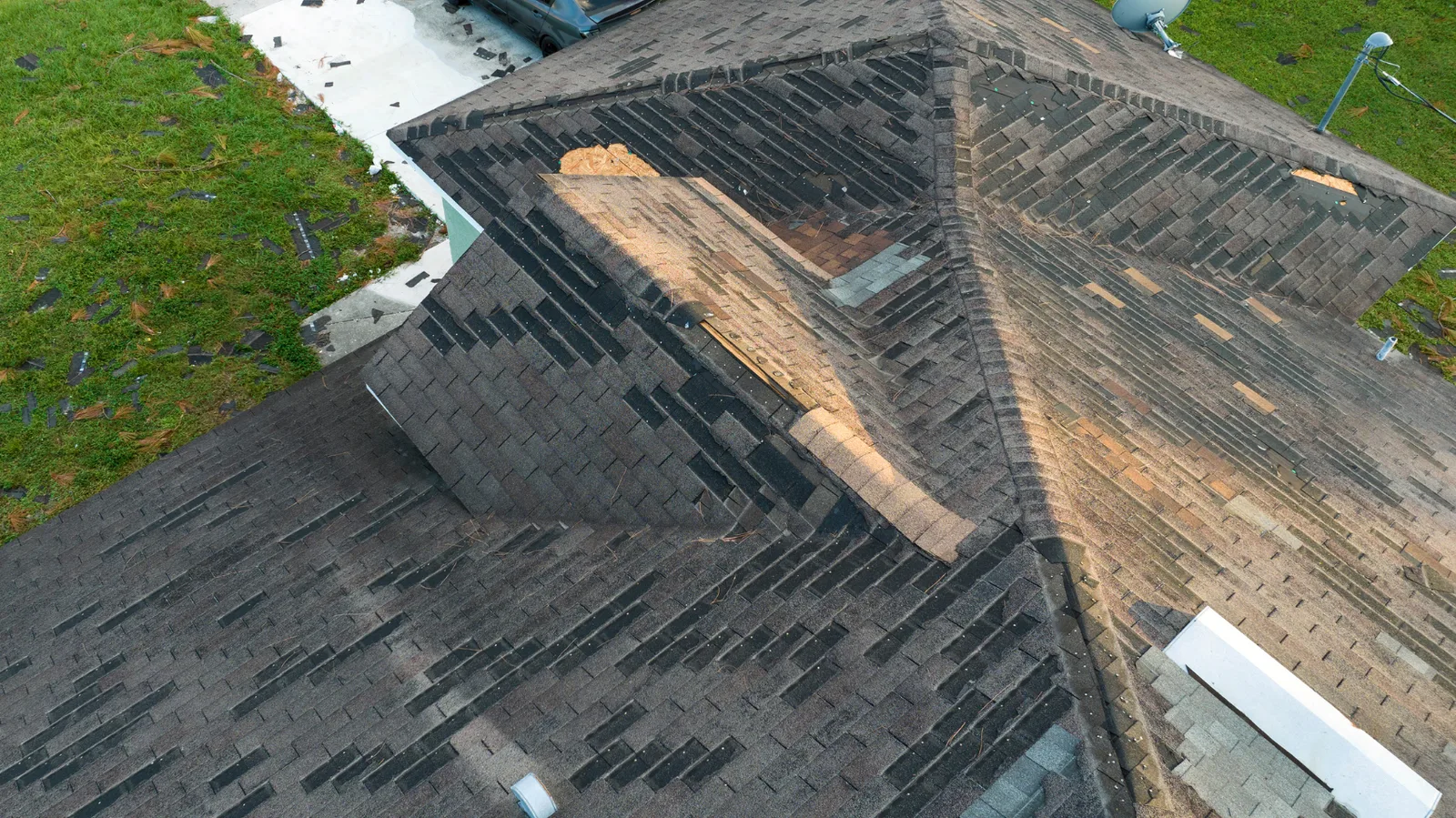
A valley is the inward junction where two roof slopes meet. Rain from both slopes gathers there before continuing toward the gutter. If that junction leaks, replacing the shingle nearest the ceiling stain can leave the real problem in place. The repair has to restore the route water follows, including the parts hidden beneath the covering.
Two roof slopes feed one drainage line
Picture rain running down the two sides of a roof beside a projecting room. Each slope contributes water to the same low line. Farther down that line, more of the roof is feeding it. A valley therefore has to handle collected runoff as well as rain falling directly on it.
That makes the direction of the layers important. Water needs a continuous route down and out, without being diverted beneath a shingle edge or into a puncture. A narrow damaged strip can interrupt a much larger drainage area. It does not follow that all of that roof needs replacement, but it explains why the roofer examines the junction beyond the first visible defect.
The visible valley is only the top of the detail
Some valleys have an exposed metal channel. Others carry water over shingles that meet along the junction. Beneath either finish, the protective layer and its connection to the rest of the roof help keep water away from the wood deck. The right detail depends on the shingles and the roofing system.
GAF’s valley guidance pairs the visible covering with underlying leak protection and overlapping roof-deck protection. It also distinguishes valley methods that suit particular shingle products. An existing pattern is not automatically the right pattern for every replacement shingle.
The GAF field guide’s valley details show why the hidden layers matter. A surface patch does not renew a split lining, correct an unsuitable lap or restore damaged wood beneath the valley.
What makes a valley repair wider than the leak
The repair boundary needs to reach material that can remain in service. Opening the affected area lets the roofer examine the support and see how the valley protection connects to the roof on both sides. New material must be joined into those layers so water passes over the connections. Stopping directly at the visible opening can leave the failed part of a lap underneath the repair.
Consider two different findings. A damaged section with sound support and workable adjoining shingles can allow a contained repair. A deteriorated lining running farther along the valley, soft decking or shingles that break when lifted requires a wider opening. The extra work follows those findings, even if only one room has shown a stain.
A stain’s shape cannot set that boundary. Water can travel below the covering before it reaches the room, and the visible mark does not show the condition of the wood. We explain the work in terms of the roof junction and the layers that need attention.
A valley problem does not automatically mean a new roof
An isolated failed valley and a worn-out roof are different problems. When the adjoining covering remains usable, rebuilding the affected junction can address the leak while retaining the rest. If deterioration extends across the connected slopes or old repairs keep failing in several places, replacement deserves a separate discussion. The condition of the roof makes that distinction.
Repair also involves practical choices. Replacement shingles can look different beside a weathered covering. Roof height, access and the length of valley being opened affect the work. Those are reasons to explain a specific repair, rather than price it from the size of the stain.
Tell us which room is affected and what you have already noticed. Our roof leak repair service follows the problem back to the roofing detail. Stay off the roof; a free inspection is the next step for understanding the valley and the surrounding slopes.